Anatomy of Dr. Bookworm
January always reminds me of Gross Anatomy. In my first year of medical school, January was when we started our first dissections of the human body.
It’s also the first time it snowed in a place where I actually lived. I went to medical school at Tufts, which is located in downtown Boston. About 1/3 to 1/2 of my med school class was from California. A bunch of us Californians wandered out to Boston Commons to play in that first snow. The snow came late that year. It snowed, and I would follow each snow flake as it fell in the courtyard outside my dorm window. It’s no wonder I had no time to study—I was too busy daydreaming.
What was I daydreaming about? Well, I was still trying to finish my dissertation for my masters degree in Creative Writing. In true Melanie fashion, I didn’t really think I’d get in to medical school. Just in case, however, I finished all my degree requirements, except for my dissertation. So, when I wasn’t at Sackler Hall for all day lectures, or when I wasn’t staying up for all nighters to memorize facts quickly in a last minute attempt to study, I was writing stories to complete my degree. Or watching tv or videos in my room. I was a very distracted med student and I told myself that it was okay, that I wasn’t going to do residency, that I wasn’t going to practice medicine anyway.
Why did I tell myself that? In retrospect, it was how I survived the stress of being a first year medical student. There were enormous amounts of information to wade through and I was never sure I was going to get through it all. So I didn’t. Survival at its best.
Tufts is different than most medical schools in that we don’t start Anatomy right away. Instead, the cadavers are shared with the dental students and they start Anatomy in the fall. In January, we are guided to the basement of an ancient building and assigned certain tables. My cadaver, M, was untouched. Yes, I remember her name after all these years. Out of respect for her family, I will only call her M.
The basement is akin to a dungeon. A highly fortified and smelly place. And once you pass the main doors into the Anatomy lab, there are tables lined up in an orderly grid-like fashion. It’s just a matter of finding yours. You wear a mask because it makes it easier. And lining up the back of the lab are jars of fetuses in varying ages. Yes, fetuses. Now that I’m a mom, I can’t really think about it. Even at the time I had a hard time looking at the jars very carefully.
I thought I would be ready for facing this first dissection. We were going to start with one of her limbs. We had a lecture about respect. We were told about the generous donation these people made for us as future doctors—the gift of themselves. Out of my group of five people, I was the least religious. At the time I was still occasionally going to church, but not really grouping myself as Catholic. Yet, as soon as that first scalpel was lifted, I halted everyone.
“Stop!” I said.
All my table mates stared at me.
“Um. Shouldn’t we say a prayer or something?”
They each gave me a look. Then realized I was serious. So we said a prayer. And then I assisted my table mates in dissecting and learning about the human body.
It never got any easier. I was as haunted by the smell of the preservative as I was haunted by M herself. Did she know what she was agreeing to? Were we treating her with enough respect? (We were. Everyone at my table was very respectful.) The day we studied the breast and breast tissue, I wrote about giving M a mastectomy. It’s what it felt like. I don’t even have to look up my writing at the time to know how I felt—it’s seared in my memory. I thought about my mom, who had had a mastectomy when I was in high school. Is this what it was like? When the surgeon had her on the operating room table? Of course it was, but with more finesse—the surgeon was once a medical student like us. He had had a Gross Anatomy class too, and a donated cadaver. And he had many more surgeries before my mom’s.
And, yet, despite my squeamishness and nightmares, we kept plodding on. Every day after anatomy, we’d shed our clothes and the hallways of Posner Hall (the medical and dental school dorm) would be littered with formaldehyde-scented scrubs. And no one, no one cooked any meat anymore. I may have been one of the few people who actually cooked, but even I couldn’t handle the dissection of chicken without thinking about fascia and tendons. No. We became vegetarians for a while. (Or I ate pre-prepared foods—lots of dumplings and potstickers and steamed buns along with mustard greens and bok choy. Courtesy of the local markets in Chinatown located in downtown Boston.)
M’s heart was amazing—literally and figuratively. She gave the five of us an immeasurable gift, most notably to myself. I realized even more how different I was from my fellow medical students. While I grew up wanting to be a doctor, most of that drive came from being the first born child of two physician parents. When I was in high school and college, becoming a doctor was the furthest thing from my mind. And yet, here I am. I realized just before graduating at UCLA (and just before starting grad school in Creative Writing) that I actually wanted to apply to med school.
I was a reluctant medical student. Everything fascinated me, but I also was a small fish now. And, and this is huge, for one of the first times in my life, I was alone. What do I mean by that? I am a twin. I’ve always had my best friend by my side. And when I went away to a different college than my twin, I immediately met Mr. Bookworm. We’ve been together ever since. Sure, we lived apart in separate cities during grad school (80 miles away from each other), but my first year in Boston, I was fully on my own.
I met a lot of kindred spirits. I stayed up all night studying at M&V with my friends. We wandered through ALL the libraries in town, especially the law libraries. It turns out the only people studying there on a Saturday night are the med students.
Yes, M’s heart was amazing—we studied the chambers of her heart, her valves, the main organ that once pumped blood throughout her body. She had died of lung disease so her heart was pretty clean. And I will never forget her selfless gift to me. A gift for the appreciation of life. And, in a lovely Tufts University School of Medicine tradition, we held a funeral/remembrance service honoring the lives of all the people who donated their bodies to us, those who were, in essence, our first patients.
With special gratitude to M and her family, and to my fellow lab mates, C/E/M/N (now a pediatrician, an anesthesiologist, a surgeon, and a family practice physician) for being patient with my tender heart. And further gratitude to C and S (now an anesthesiologist by way of internal medicine detour and an OB/GYN) for their support during those years as well and many, many all-nighters.
And….to the first year medical students at Tufts who are likely not reading this blog but are just starting their first days of Gross Anatomy, good luck to you all. I wish you to hold onto your empathy and to your heart. These two things—more than an eidetic memory and more than having your first choice in your third year rotations—will help make you the best doctor you can be. And, I really hope Dr. El-Bermani is still teaching you all.
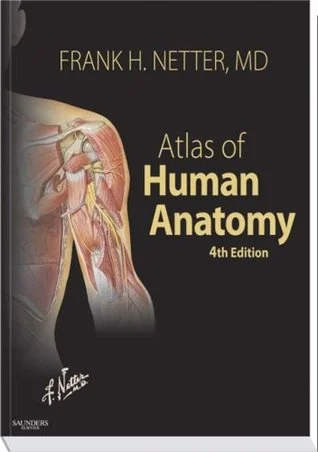
Addendum: If I can find my copy of Netter's Atlas of Human Anatomy, I would so I could study it again. The illustrations are beautifully done. My copy is battered and coming off its binding like a favorite book. It's possible that Mr. Bookworm will unearth it as he's cleaning out our garage. And I just found out they have Netter's flashcards! Maybe I'll just download those to my kindle instead.
I tried to post this with a picture of Little Lion dressed up as Doc McStuffins. We're side by side in white coats and using our otoscopes. Alas I was vetoed, and I don't post pictures here without the bookworm girls' permission.